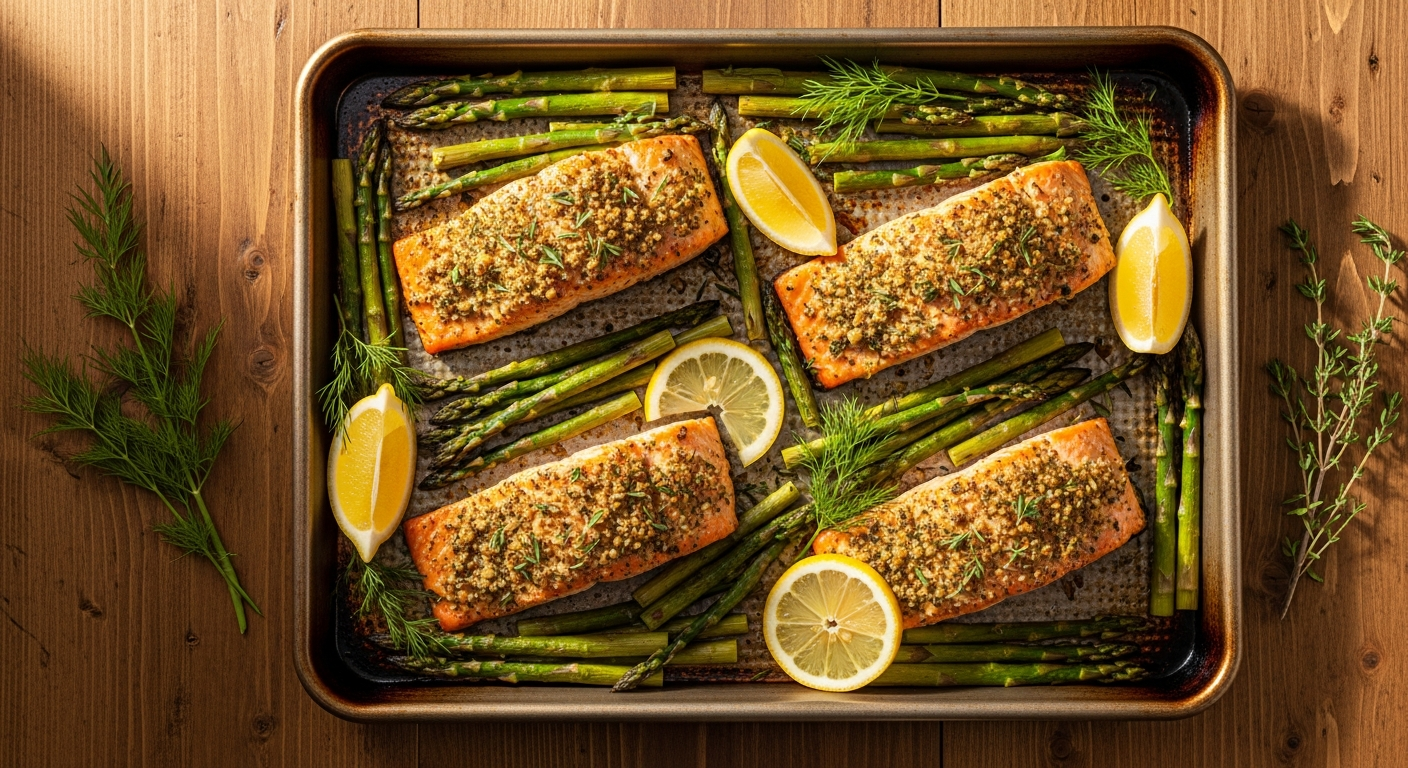
Why does sheet pan salmon work so well for paleo meals?
Because it’s one pan, 25 minutes, and zero compromise on flavor. The salmon picks up the lemon-herb marinade while the asparagus roasts to crispy perfection right alongside it. No separate pots, no complicated timing — just throw everything on a sheet pan and let the oven do the work.
I make this at least twice a month. It’s one of those recipes where the effort-to-result ratio is almost unfairly good. The lemon juice caramelizes slightly in the oven, the herbs get fragrant, and the asparagus develops those slightly charred tips that make roasted vegetables so addictive.
What ingredients do you need?
Eight ingredients. That’s it. Wild-caught salmon, fresh asparagus, lemon, olive oil, garlic, and three herbs. Everything else is optional — though I’ll mention a few upgrades below that take this from great to outstanding.
- 4 salmon fillets (about 6 oz each, skin-on preferred)
- 1 bunch fresh asparagus (roughly 1 pound), tough ends snapped off
- 3 tablespoons extra virgin olive oil
- 1 large lemon (juice + zest)
- 4 cloves garlic, minced
- 2 tablespoons fresh dill, chopped (or 1 tsp dried)
- 1 tablespoon fresh thyme leaves
- 1 teaspoon fresh rosemary, finely minced
- Sea salt and black pepper to taste
Optional but recommended: a pinch of red pepper flakes for a subtle kick, and cherry tomatoes halved — they burst in the oven and create this amazing sauce-like thing on the pan. Wait, is that still a sheet pan recipe if I’m adding tomatoes? Yes. Yes it is.
How do you prepare the lemon herb marinade?
Whisk together olive oil, lemon juice, lemon zest, minced garlic, and chopped herbs in a small bowl. That’s your marinade. No need to let it sit for hours — 10 minutes while the oven preheats is plenty.
The key is the lemon zest. Most people skip it. Don’t. The zest contains essential oils that are way more aromatic than the juice alone. Use a microplane if you have one. A regular grater works too, just avoid the white pith underneath — it’s bitter.
Here’s the ratio I’ve found works best: juice of one lemon to three tablespoons olive oil. More lemon and the salmon tastes sour. Less and the herbs don’t have enough liquid to distribute evenly. Hang on, let me think… was it three tablespoons or a quarter cup? Three tablespoons. A quarter cup would be too oily.
What’s the step-by-step cooking process?
Preheat oven to 400F (200C). Toss asparagus with half the marinade on the sheet pan. Place salmon fillets skin-side down. Drizzle remaining marinade over the fish. Bake 12-15 minutes. Done.
Detailed Steps
- Preheat: Set your oven to 400F (200C). Line a large sheet pan with parchment paper — this makes cleanup almost nonexistent.
- Prep asparagus: Snap off the woody ends (they break naturally at the right spot). Spread on the sheet pan. Drizzle with about half the marinade and toss to coat.
- Place salmon: Nestle the salmon fillets between the asparagus spears, skin-side down. Spoon the remaining marinade over each fillet. Season generously with sea salt and pepper.
- Add extras: If using cherry tomatoes, scatter them around the salmon now. Red pepper flakes go on top of the fish.
- Bake: 12 minutes for medium (slightly translucent center), 15 minutes for well-done. The fish should flake easily with a fork when it’s ready.
- Rest: Let it sit on the pan for 2-3 minutes. Hit it with a fresh squeeze of lemon right before serving.
How do you know when salmon is perfectly cooked?
The internal temperature should reach 125-130F (52-54C) for medium and 145F (63C) for well-done. If you don’t have a thermometer, press the thickest part gently — it should feel firm but still have a slight give.
Overcooked salmon is dry salmon. And dry salmon is sad salmon. I’d rather pull it a minute early than a minute late. The residual heat from the pan continues cooking the fish after you take it out of the oven, so factor that in. A meat thermometer costs ten bucks and saves every piece of protein you’ll ever cook. Best kitchen investment I’ve made.
Can you meal prep this recipe?
Absolutely. The salmon keeps in the fridge for 3-4 days in an airtight container. The asparagus holds up surprisingly well when reheated — better than most vegetables. Reheat at 300F for 5-7 minutes to avoid drying out the fish.
For meal prep, I cook the salmon to medium (not well-done) since reheating adds more cooking time. Undershoot slightly. Your future self will thank you. Pack the lemon wedges separately and squeeze fresh lemon when serving — reheated fish especially benefits from that brightness.
What sides go well with this dish?
Cauliflower rice is the obvious paleo choice and takes 5 minutes in a skillet. Sweet potato wedges roasted on a separate pan work great too. Or keep it simple with a big green salad dressed in olive oil and lemon.
If you’re feeling ambitious: make a quick avocado sauce. Half an avocado, juice of half a lemon, a tablespoon of olive oil, salt. Mash it with a fork. Spoon it over the salmon. It sounds weird with the lemon herb thing already going on, but trust me — the creamy avocado against the bright citrus is chef’s-kiss level good.
Frequently Asked Questions
Can I use frozen salmon for this recipe?
Yes, but thaw it first. Place the sealed fillets in cold water for 30-45 minutes. Never microwave-thaw salmon — it cooks the edges while the center stays frozen. Pat completely dry before marinating, or the marinade slides right off.
Is farm-raised salmon okay for paleo?
Wild-caught is preferred for paleo because of its better omega-3 to omega-6 ratio. Farm-raised works in a pinch, but look for labels like „sustainably farmed“ or „ASC certified.“ Sockeye and coho are almost always wild-caught if you want to play it safe.
What if I don’t like asparagus?
Swap it for broccoli florets (same cook time), green beans (reduce time by 2-3 minutes), or zucchini rounds (reduce time by 3-4 minutes). Brussels sprouts halved also work brilliantly — they get caramelized edges that pair great with the lemon.
Can I use dried herbs instead of fresh?
Yes. Use one-third the amount listed for fresh herbs. So 2 tablespoons fresh dill becomes about 2 teaspoons dried. Fresh is noticeably better here though, especially the dill. If you can only buy one herb fresh, make it the dill.
How do I keep the salmon from sticking to the pan?
Parchment paper is the easiest solution. If you’re out of parchment, brush the pan with olive oil before placing the fish. Skin-on fillets stick less than skinless. And never try to move the salmon before it’s done cooking — it releases naturally when it’s ready.